
Obtaining a NETA Test Technician certification is an extremely challenging task that comes with really great rewards. Certified test technicians are highly respected for their knowledge to perform electrical testing across a wide variety of power systems while keeping current with emerging technologies and practices.
Looking to get started in electrical testing? Learn how and where to apply.
The criteria for certifying test technicians is laid out in NETA ETT-2026 standards. Certification exams consist of a specific number of random questions from each knowledge category and are weighted by difficulty.
Why Technicians Fail
Many experienced electrical technicians fail their NETA exams because they assume the test reflects their day-to-day fieldwork. In reality, NETA evaluates your depth of understanding across the entire electrical testing discipline, requiring you to explain concepts and the “why” behind them, not just repeat the “how”.
Daily fieldwork builds efficiency and familiarity, but the exam exposes shallow knowledge. It tests everything in the Detailed Content Outline (DCO), including rare apparatus you may rarely or never touch on the job (network protectors, reclosers, etc.).
Because NETA technicians are expected to possess a broad knowledge base, it is important to review equipment, specifications, and test procedures not normally serviced by your company.
Exam Structure
Building on how to prepare for the test, it helps to understand what the NETA certification structure actually looks like and how the exams are weighted.
For Levels 2, 3, and 4, the tests are closed-book, proctored computer exams administered via Pearson VUE (typically 100 questions for Levels 2 and 3, and 65 questions for Level 4, with a 2-hour time limit).
The exam questions are heavily distributed across four core domains (though exact percentages shift slightly depending on your level).
Component Testing (47% - 55%): This is the bulk of the test, covering specific apparatus like transformers, breakers, switches, relays, and cables.
Electrical Testing Fundamentals and Theory (15% - 25%): Basic electricity, ac/dc theory, series/parallel circuits, and math formulas.
Safety (10% - 15%): Strict adherence to NFPA 70E, OSHA regulations, proper PPE, and establishing an electrically safe work condition.
Systems and Commissioning (5% - 20%): How individual components integrate into an entire power system framework.
How to Prepare
Cramming for a few days doesn’t work. Start weeks or months in advance using short, consistent study sessions (30 to 45 minutes) outside of work hours. Aim to develop a consistent, long-term strategy.
Leverage resources in the Field. Use on-the-job time to experiment safely, analyze why test equipment yields specific results, and connect expected values to actual numbers.
Rely on practice exams to target weaknesses. Focus on the areas you have the least familiarity with, across all four domains (Safety, Theory, Electrical Tests, and Systems).
Have a realistic timeframe for preparation in mind
Test technician life involves long working hours, which can make it hard to find the appropriate time to study. “Cramming” for the exam usually never goes over well - how much time you need to prepare is dependent on your level of field experience and how much time you have until your exam date.
Don’t underestimate the complexity of your upcoming exam; have a realistic timeframe for preparation in mind. If you expect to pass, it will require at least 8 weeks of regular technical review sessions.
How TestGuy can help you study
If you are looking for guidance to advance your position in the world of electrical testing, you’ve come to the right place. TestGuy offers a wealth of resources to help you study, and our community is comprised of certified test technicians with a broad range of skill sets.
Everyone is unique, and only you can create a study plan that best suits you alone - but you don’t need to be alone in the process. Here are a few tips to help point you in the right direction:
1. Start with an assessment exam and review your results
TestGuy offers a series of comprehensive practice exams formulated using the criteria found in NETA-ETT standards. We have an active question bank with over 4,000 questions, many of which have been submitted by community members in the forums after they sit for certification.
NETA Practice Exams
- ETT Level 1 Assessment Test 50 Questions. 60 minutes.
- ETT Level 2 Practice Exam 100 Questions. 120 minutes.
- ETT Level 3 Practice Exam 100 Questions. 120 minutes.
- ETT Level 4 Practice Exam 65 Questions. 120 minutes.
At the end of each practice test, carefully read through the reference material provided for the questions missed. Don’t only look for the correct answer to the question asked, but read the entire article to better understand the specific topic.
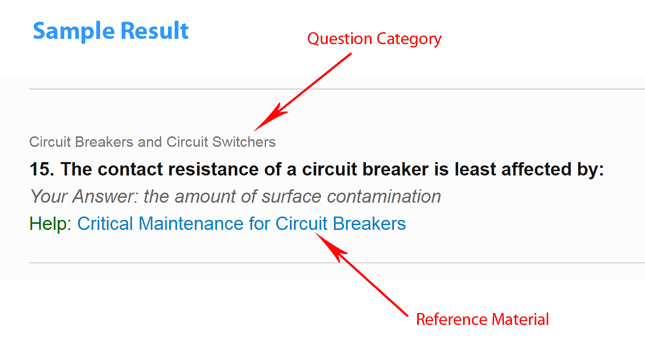
At the end of each practice test, carefully read through reference material given for the questions missed.
2. Take time to review the links found in the corresponding study guide
Each level practice exam provides a table breaking down your score percentage by category. These categories are based on the structure found in NETA-ETT standards and correlate with each section of the associated study guide.
ETT / NETA Study Guide
- ETT Study Guide I: Safety
- ETT Study Guide II: Electrical Testing Fundamentals and Theory
- ETT Study Guide III: Component Testing
- ETT Study Guide IV: Systems and Commissioning
It’s recommended that you focus your study time based on these results by researching topics related to the categories you have the most trouble with. You can also compare your results to the subject matter found in the official NETA detailed course outlines.
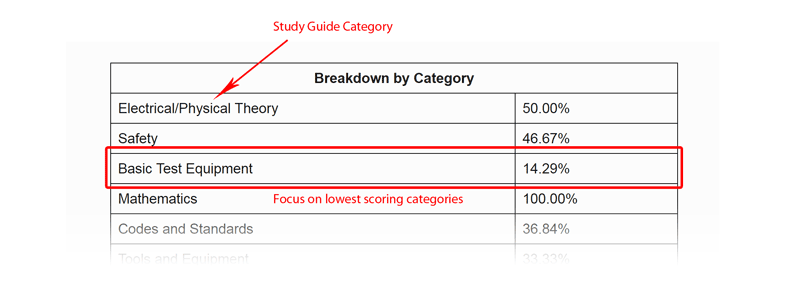
Focus your study time based on these results
3. Browse TestGuy Tagged Content
Tagging is one of the main ways content is organized on TestGuy. Additional resources can be found by browsing tags related to the categories you frequently miss.
If you are missing questions related to transformers, for example, take time to read through the information found under the “transformers” tag.
4. Talk with other TestGuy members
TestGuy is one of the best ways to connect directly with other techs just like you. Our community is comprised of test technicians with a wide range of certification levels and skill sets.
Spend some time in the discussion forums and see what our members are saying about the NETA exam; new information is being added every day, and older information is still relevant. Be sure to replenish the well for future test takers by sharing your experience.
5. Monitor your progress
During the course of your study, continue to take practice exams and focus on the categories you frequently miss using the steps above. Try the next higher level practice exam for an extra challenge and take a lower-level practice exam for a refresher.
We understand it’s not easy finding time for 100-question practice exams, so we have developed shorter pop quizzes to help you hone your skills in special categories like circuit breakers, electrical theory, codes, and standards, etc.
We’ve also designed TestGuy to be mobile-friendly to help make it easy to study on the go. The ETT Tech Quiz is a short, well-rounded review that is highly recommended for micro study sessions.
Additional Tips
-
NETA certification exams are based on a combination of field experience and classroom knowledge. Regardless of your classroom education level, the chances of passing the NETA exam without field experience are slim.
-
TestGuy practice exams should be just one of many tools in your box of resources. For the most part, none of the questions on the NETA exam will be identical to those found on this website. However, the underlying theories and important concepts are all covered.
-
Don’t expect to get by with just passing the practice exams. Have a well-rounded and disciplined plan that utilizes multiple sources and give yourself plenty of time in advance of your exam to absorb the information.
-
Organizing study groups with fellow technicians is a great way to stay motivated and increase everyone’s chance of passing. Often, TestGuy members will organize study groups and local meetups in the forums.
-
Much of the knowledge required to pass NETA exams comes from field experience. Review your practice exam results with other techs on the job during the course of your study and discuss other ways the question could be asked.
Official Resources
NETA provides specific documentation that acts as the blueprint for what you will be tested on. You can find these resources on the official NETA website:
-
Detailed Content Outlines (DCOs): Available for each level on NETA’s website, these break down every single sub-topic you are expected to know.
-
Exam Reference List: A compiled bibliography of industry standards (including ANSI/NETA standards, IEEE, and NFPA) that point you to the exact literature the test questions are pulled from.
-
Formulae Sheet: NETA provides a standard formula sheet during the exam. Reviewing this ahead of time ensures you know how and when to apply each equation under timed conditions.
-
Passing the NETA Exam: Train Don’t Cram (NETA World Journal)
Stuck on a topic or need additional guidance?
Visit the message boards and get the answers you need. You can also find tons of useful information under related tags.
Give us your feedback
It is the goal of TestGuy to offer the best collection of study resources. Let us know how this study guide has helped you and ways we can make it better by leaving a comment below.
About This Guide
This program follows the criteria set forth in the ANSI/NETA ETT-2026 Standard for Certification of Electrical Testing Technicians. You should first familiarize yourself with this standard before you proceed.
This study guide is in no way intended to replace any kind of classroom or group study led by a certified instructor. This study guide was not created - and is not endorsed - by NETA or any of its affiliates.