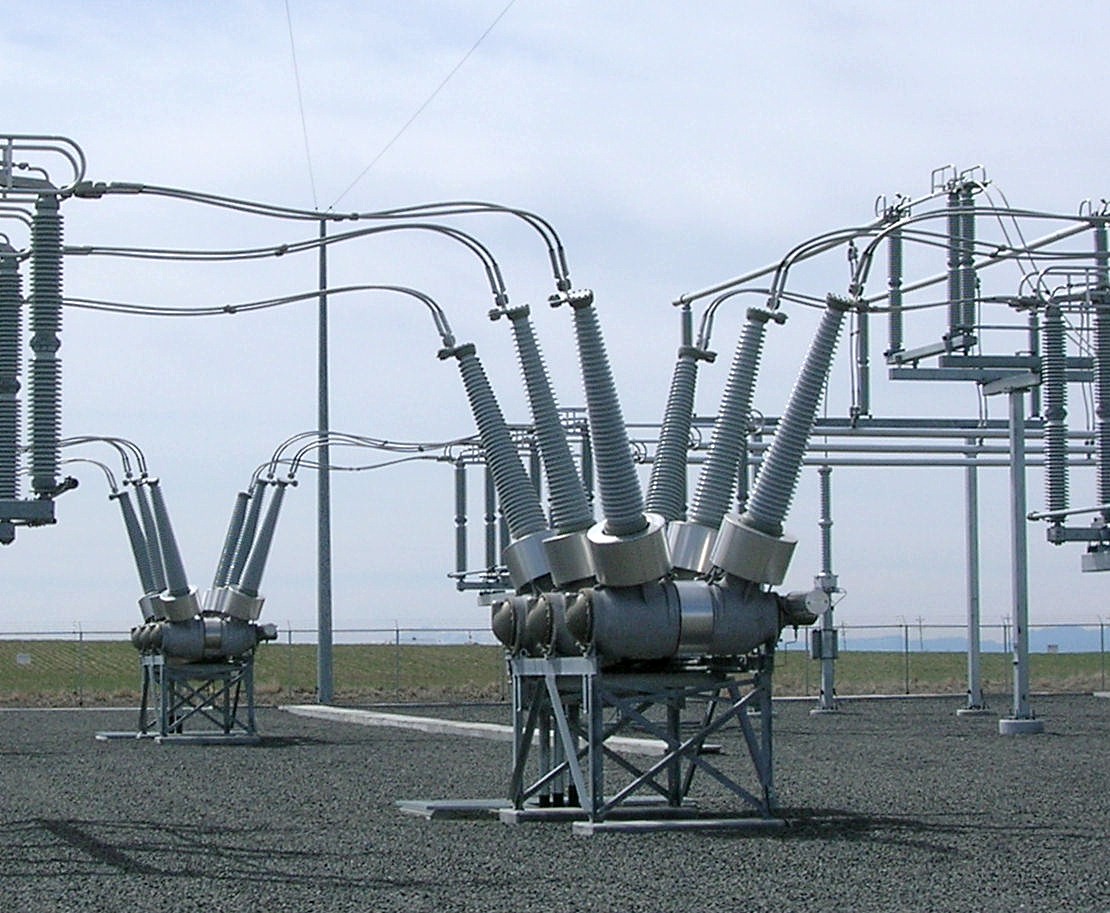
Circuit breakers at substation near Denver International Airport, Colorado. Photo: Wikimedia.
Circuit breakers are designed to manage current flow under normal conditions and interrupt it during faults. While they may remain dormant for extended periods, circuit breakers must operate quickly and reliably when called into action.
Factors such as environmental contaminants, hardened grease, or mechanical wear can degrade performance. This is especially problematic when tripping after extended periods of inactivity.
First trip testing is a diagnostic tool that evaluates a circuit breaker’s condition under real-world operating conditions. These measurements allow technicians to gain valuable insights into equipment reliability before scheduled maintenance begins.
Related: 4 Critical Tests for Evaluating HV Circuit Breaker Performance
What is First Trip Testing?
First trip testing evaluates circuit breaker performance by observing the trip cycle while connected to the power system, prior to isolation for maintenance. This test captures important data about the breaker’s operational health, including contact time, coil current, DC voltage, and auxiliary contact timing.
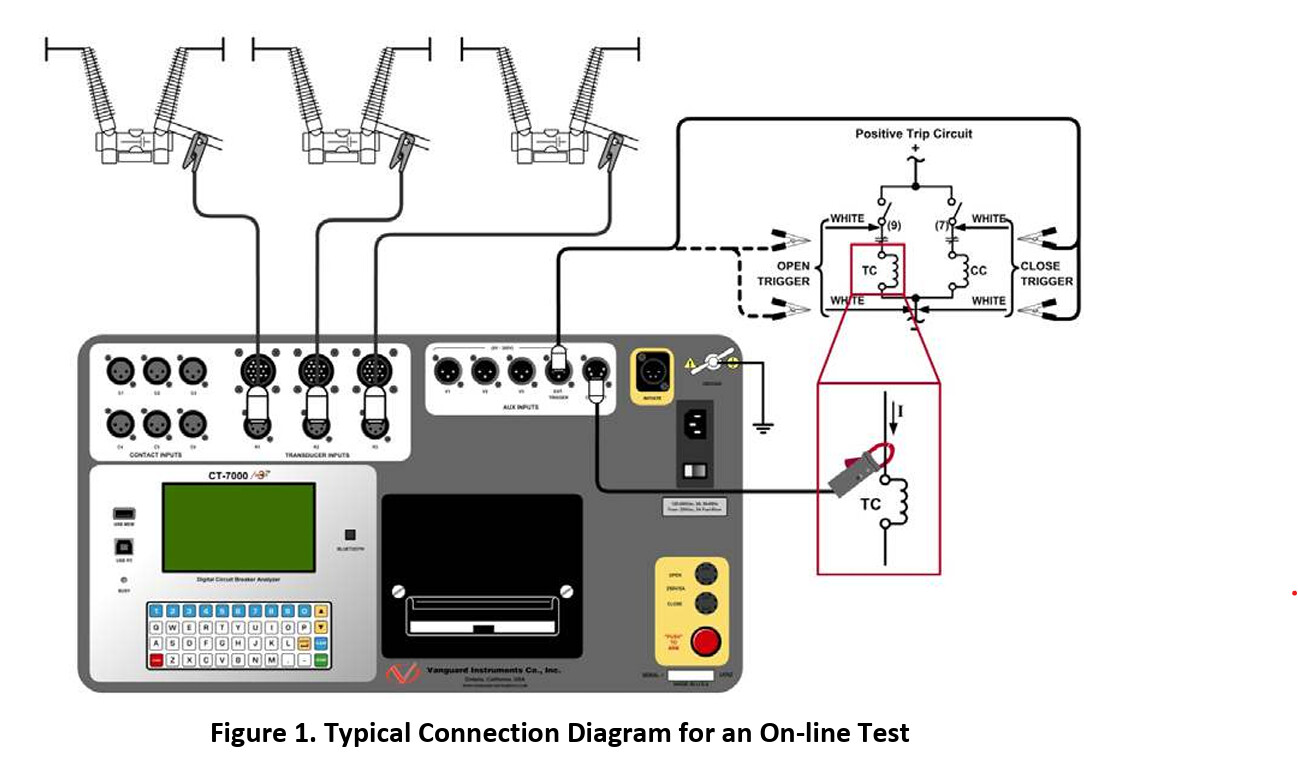
Typical wiring diagram for circuit breaker first trip test. Photo: Vanguard Instruments.
By simulating real-world conditions, first trip testing reveals issues that may not be evident in off-line tests. Uncovering these issues early allow technicians to focus on repairs that ensure the breaker can respond effectively during a fault.
Methodology
First trip testing measures three key indicators about circuit breaker performance:
1. Contact Time
Determined using non-contact AC current probes connected to the secondary winding of the breaker’s current transformer (CT). These probes detect the presence or absence of main contact current. A timer, triggered by the trip or close command, calculates the contact time based on current flow changes.
2. Coil Current
The amplitude and waveform (signature) of the trip or close coil current are recorded. This data helps identify issues like sticky trip latch components or loose control circuit connections.
3. DC Voltage and Auxiliary Contact Timing
This test monitors the control circuit voltage and the timing of auxiliary contacts, which are essential for coordinated breaker operation.
The collected data is compared to manufacturer specifications and previous test results to evaluate performance. For example, deviations in the trip coil current signature may indicate mechanical drag, while voltage irregularities could point to battery or cabling issues.
Diagnostic Insights
First trip testing provides a wealth of diagnostic information that cant be obtained with traditional maintenance techniques.
Comparing trip coil current graphs with historical data can reveal mechanical issues like sticky latches and loose connections. Timing tests can identify delays in trip initiation often stem from misaligned or malfunctioning auxiliary contacts. Variations in the DC voltage profile may indicate problems with the battery, charger, or associated wiring.
If the first trip reveals slow tripping times or other anomalies, further off-line testing is recommended to dig deeper. Tests such as dynamic resistance measurement, motion analysis, and detailed coil current profiling can pinpoint specific issues, guiding targeted maintenance.

Typical first trip test on-line timing chart. Photo: Vanguard Instruments.
Key Takeaways
-
First trip testing is an essential diagnostic tool for evaluating circuit breaker performance in real-world conditions. It offers several benefits for equipment owners, providing insights into its reliability before scheduled maintenance.
-
By measuring contact time, coil current, DC voltage, and auxiliary contact timing, it uncovers potential issues that could compromise reliability. Early detection of slow operation or faulty components prevents failures during critical fault conditions.
-
Testing the breaker under actual operating conditions provides a more accurate assessment than off-line tests. Test results focus maintenance efforts on specific problem areas, improving operational efficiency and reducing system downtime.